02Hardware e softwareHardware & software
Particular Power Strip
Una ciabatta con quattro prese comandabili a distanza: nata con Arduino e Bluetooth, ora su ESP32 con un server HTTP.
A power strip with four remotely controlled outlets: born on Arduino and Bluetooth, now on ESP32 with an HTTP server.
L'ideaThe idea
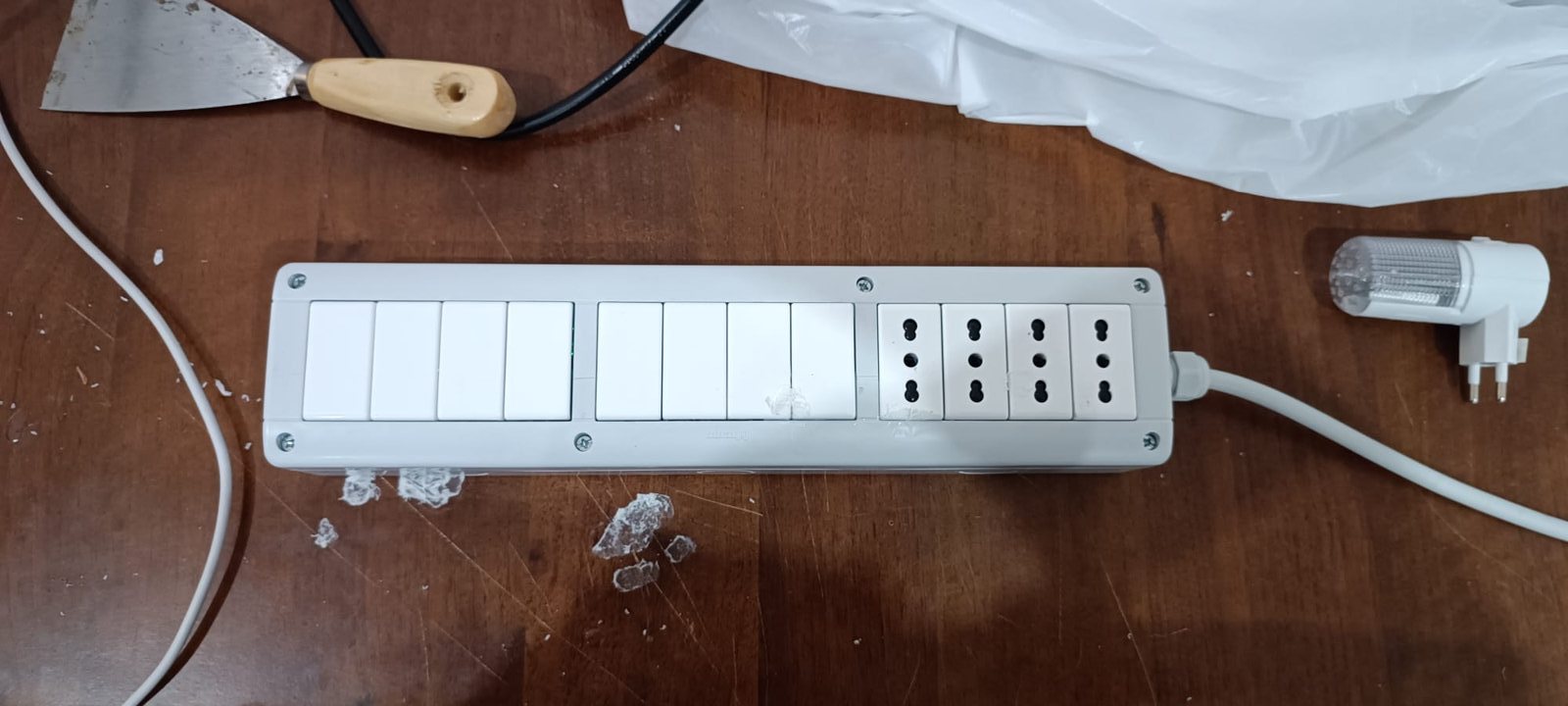
Particular Power Strip (PPS) è una ciabatta con quattro prese che si accendono e si spengono a distanza, pensata per automatizzare alcuni elettrodomestici di casa. Prese, modulo a quattro relè, alimentatore e step-down sono montati e cablati dentro una cassetta BTicino IP40 con pressacavo.
Particular Power Strip (PPS) is a power strip with four outlets that can be switched on and off remotely, meant to automate a few home appliances. The outlets, a four-relay module, a power supply and a step-down converter are mounted and wired inside a BTicino IP40 box with a cable gland.
Versione 1: Arduino e BluetoothVersion 1: Arduino and Bluetooth
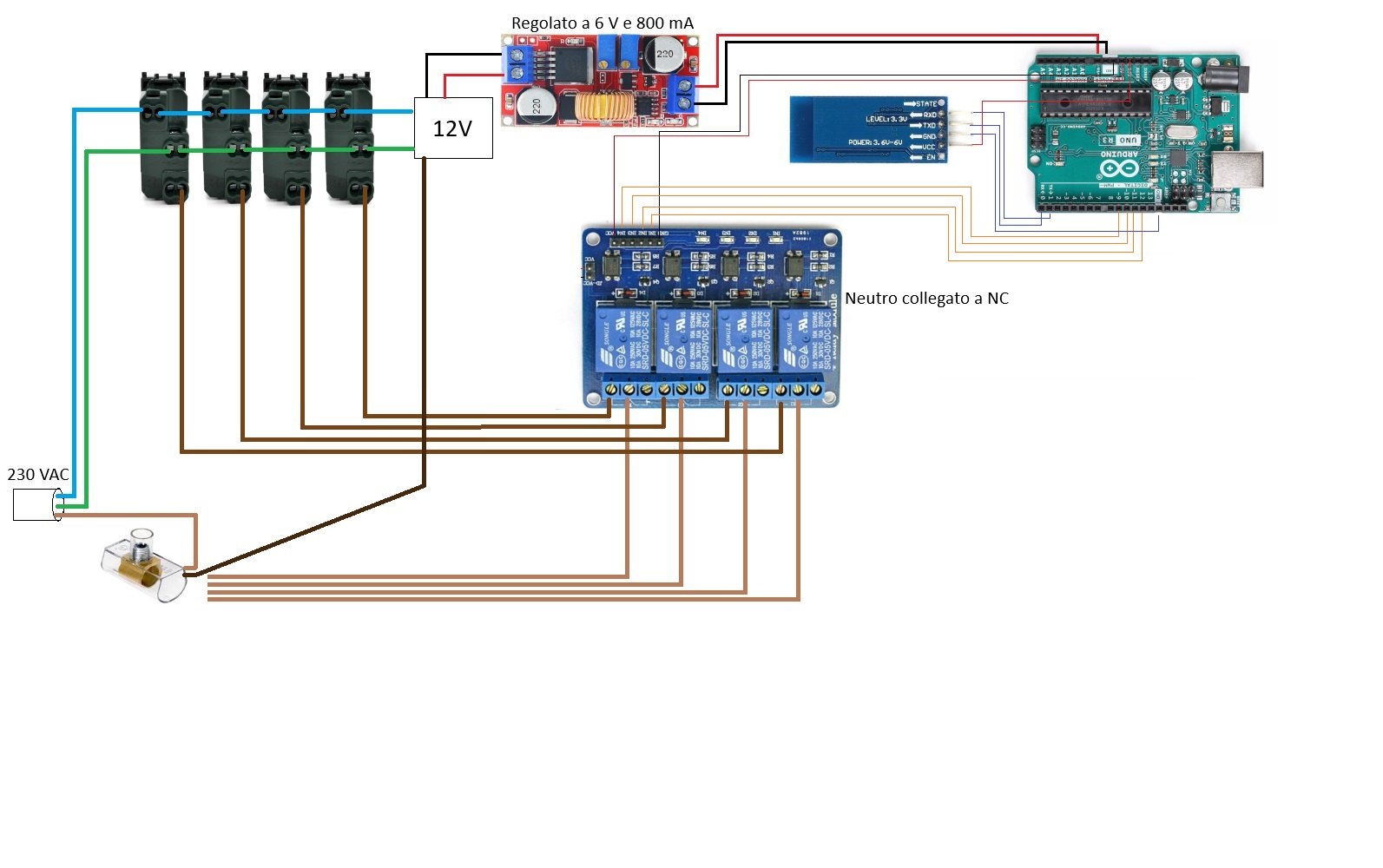
La prima versione usa un Arduino Uno con un modulo Bluetooth HC-06. Dopo l'abbinamento, da un'app di terminale Bluetooth sul telefono si inviano comandi di un solo carattere: da 0 a 3 per commutare le prese, partendo da sinistra, e N per leggere lo stato di tutte. L'ho presentata all'Arduino Day 2024 e al Linux Meeting 2024 di Palermo.
The first version uses an Arduino Uno with an HC-06 Bluetooth module. Once paired, any Bluetooth terminal app on a phone sends one-character commands: 0 to 3 switch the outlets, starting from the left,, and N reads the state of all of them. I presented it at Arduino Day 2024 and Linux Meeting 2024 in Palermo.
Versione 2: ESP32 e Wi-FiVersion 2: ESP32 and Wi-Fi
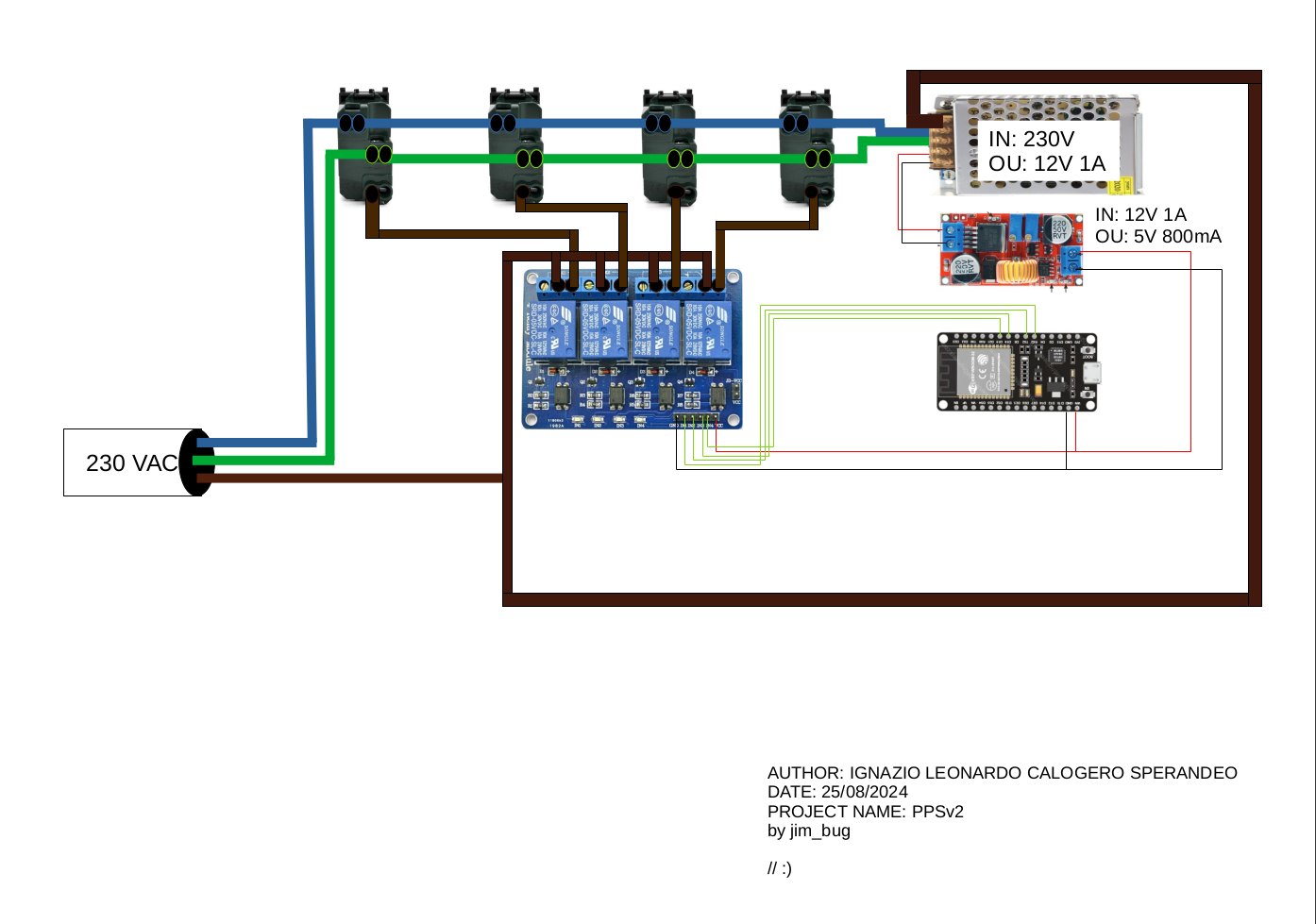
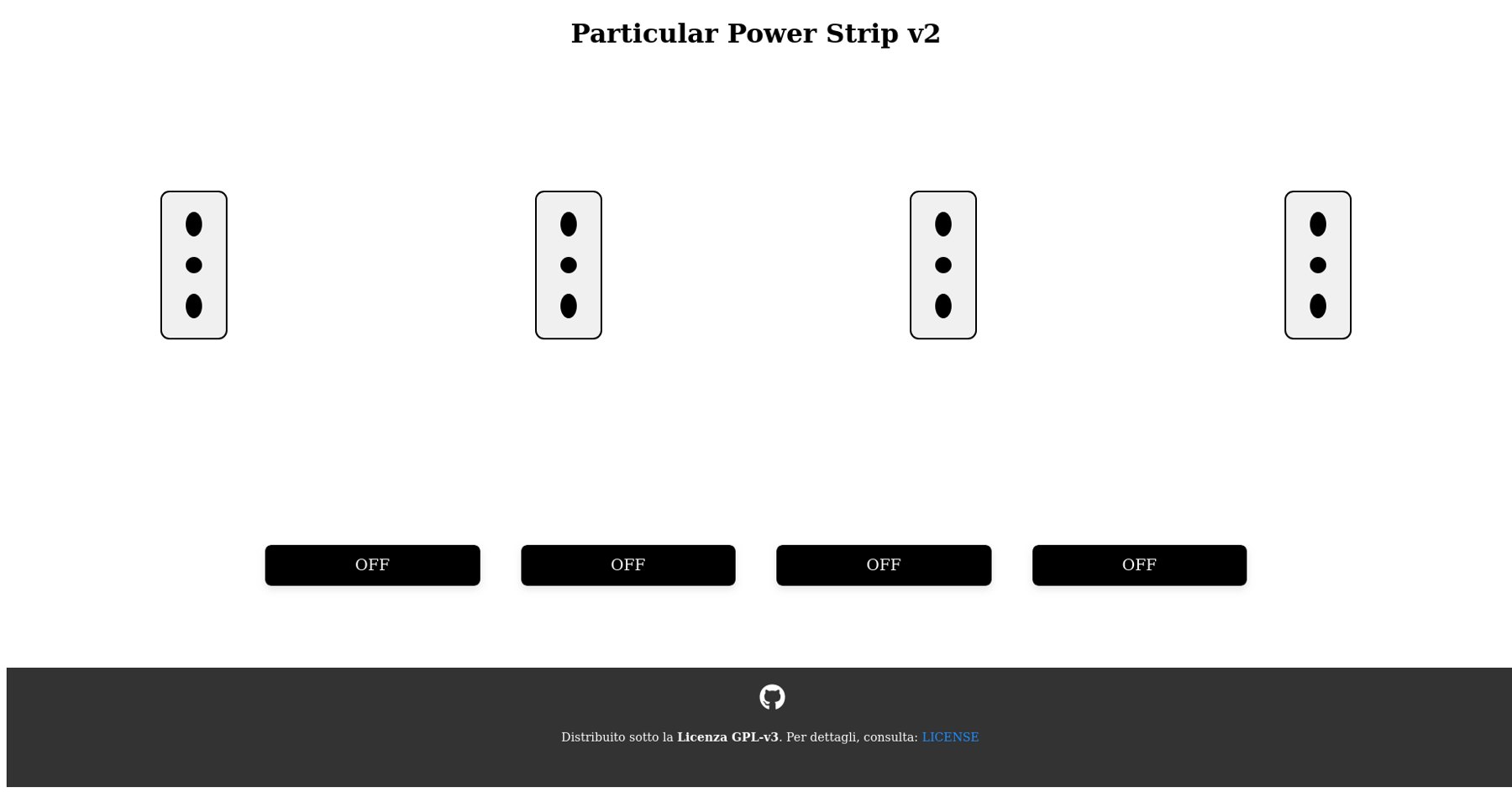
Nella v2 Arduino e HC-06 lasciano il posto a un ESP32, che si collega alla rete Wi-Fi e avvia un server HTTP sulla porta 5544. Dal browser si vede lo stato delle quattro prese e si comandano con un clic, senza inviare comandi a mano. La pagina web viene incorporata nel firmware tramite un piccolo script Python. Per questa versione ho scritto anche il documento dei requisiti (SRS) e lo schema a blocchi.
In v2 the Arduino and HC-06 make way for an ESP32, which joins the Wi-Fi network and runs an HTTP server on port 5544. From the browser you see the state of the four outlets and switch them with a click, with no commands typed by hand. The web page is embedded in the firmware by a small Python script. For this version I also wrote the requirements document (SRS) and the block diagram.
LimitiLimitations
La comunicazione della v2 non è ancora cifrata, quindi la ciabatta va usata solo all'interno di una rete fidata. Il codice della v2 si trova nel branch pps-v2 del repository.
Traffic in v2 is not encrypted yet, so the strip should only be used inside a trusted network. The v2 code lives on the pps-v2 branch of the repository.